
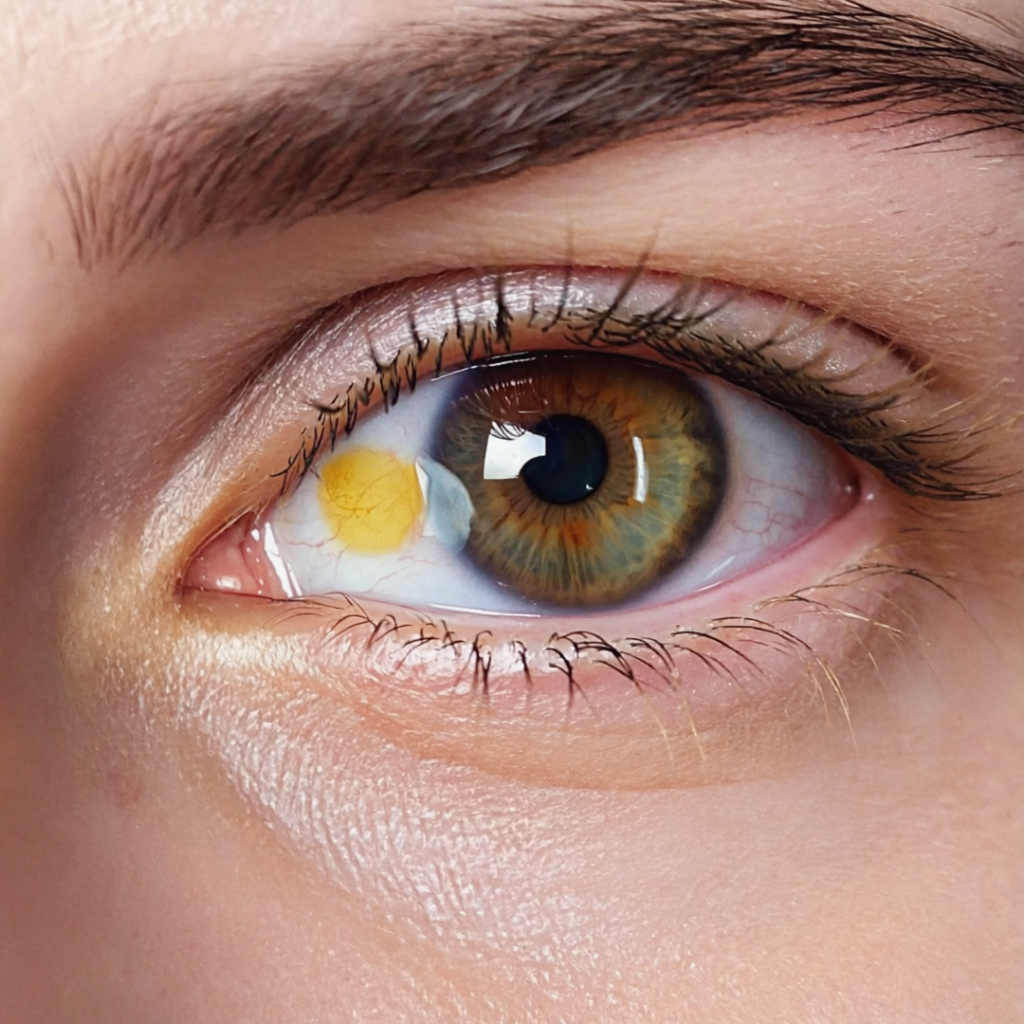
A pinguecula is a small, yellowish growth that appears on the conjunctiva, usually on the side closest to the nose. It is composed of collagen and deposits of fat and protein. Although pingueculae are benign, they can cause dryness, a gritty sensation and cosmetic concerns.
Why does pinguecula develop?
Chronic exposure to ultraviolet light, wind, dust and dryness can lead to degeneration of conjunctival tissue, resulting in a pinguecula. People who spend many hours outdoors without UV protection are at higher risk. Wearing contact lenses or working in dusty environments can also contribute.
Symptoms and when to seek help
A pinguecula may be asymptomatic, but many patients experience redness, irritation, burning and the feeling of a foreign body in the eye. Sometimes the pinguecula becomes inflamed (pingueculitis), causing pronounced redness and discomfort.
You should seek professional evaluation if the bump grows quickly, interferes with contact lens wear, causes recurrent inflammation or raises cosmetic concerns.
Treatment and management
- Lubrication and UV protection: Artificial tears, sunglasses with UV protection and wide-brimmed hats help reduce irritation and slow growth.
- Anti-inflammatory drops: During acute inflammation, lubricating gels or short courses of anti‑inflammatory drops may be prescribed.
- Custom scleral lenses: In cases where the pinguecula causes discomfort with regular contact lenses, a scleral lens can vault over the growth, relieving friction and protecting the conjunctiva.
- Surgical removal: Rarely, if the pinguecula grows large, becomes constantly inflamed or causes significant cosmetic concerns, surgical excision may be recommended.
At M’Eye Clinic we take a personalised approach. We assess the size, location and symptoms of the pinguecula and discuss appropriate management. Preventive measures and customised lenses can often avoid the need for surgery. If surgery is required, we ensure proper post‑operative care and design protective lenses to support healing.