
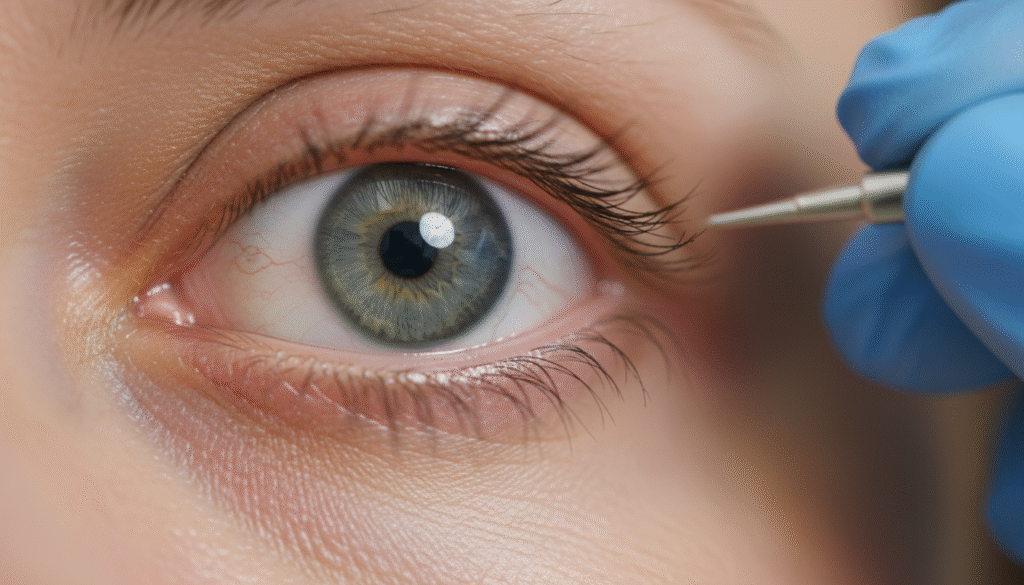
Blinking is an automatic reflex that protects the cornea, spreads tears evenly and removes debris from the eye. After certain brain injuries or neurological disorders, the blink reflex can diminish or disappear altogether. Patients may be unable to close their eyelids fully, leading to exposure keratopathy – the drying and damage of the cornea due to constant exposure to the environment.
Why do patients lose the blink reflex?
Injuries to the facial nerve (seventh cranial nerve), stroke affecting the motor cortex, traumatic brain injury, Parkinson’s disease, ALS or surgeries involving the brain stem can all interfere with blinking. Without blinking, the tear film evaporates quickly. The cornea becomes dry, punctate damage appears and infection risk increases. Nighttime is especially risky because the eyelids may remain partially open during sleep, leading to severe ulceration and scarring.
Consequences of chronic exposure
Patients report constant discomfort, burning, blurred vision and a sensation of grit in the eye. Left untreated, exposure keratopathy can lead to persistent epithelial defects, corneal ulcers, infection, scarring and even perforation. The quality of life is significantly reduced, and the patient often cannot read, work on a computer or drive because of the pain and blurred vision.
Protection and rehabilitation at M’Eye Clinic
- Protective scleral lenses: Large-diameter lenses vault over the cornea and maintain a reservoir of fluid between the lens and the eye. This protects the cornea from drying, supplies oxygen and acts like a therapeutic bandage. It also improves visual acuity by creating a smooth optical surface.
- Moisture chambers and ointments: We may recommend moisture chamber goggles, night-time lubricating ointments or taping the eyelids at night to ensure they close fully.
- Neurological and surgical treatments: Sometimes lid implants or temporary tarsorrhaphy (partially sewing the eyelids together) are needed. We coordinate with neurologists and surgeons for comprehensive care.
If you or a loved one suffer from reduced blinking due to brain injury or a neurological condition, know that there are ways to protect vision and relieve discomfort. Contact us to learn how customised lenses and specialised therapy can help preserve the eye and improve quality of life.