
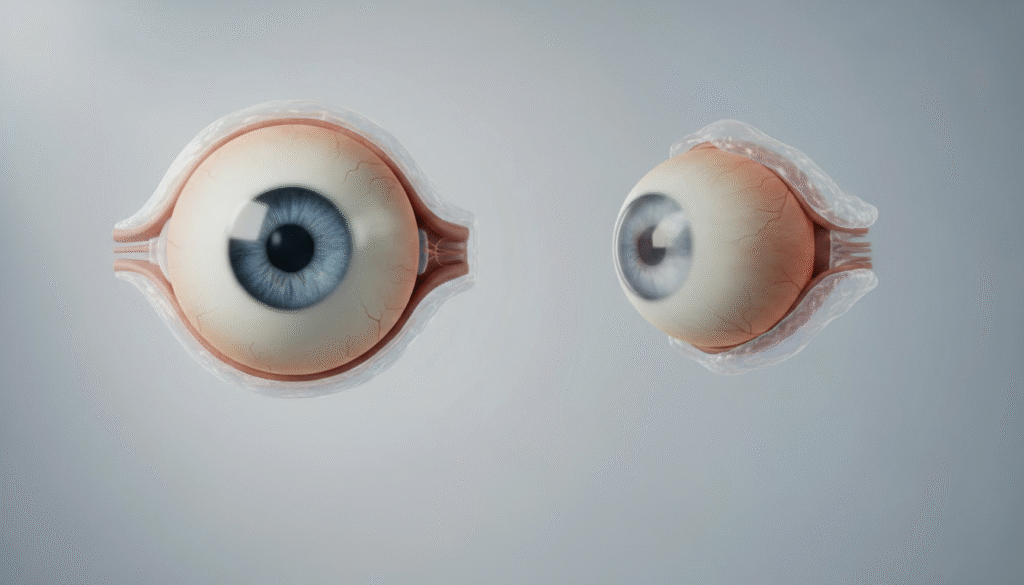
Microphthalmia (“small eye”) is a congenital developmental anomaly in which the eye does not grow to its normal size. Sometimes only one eye is affected; sometimes both are. The condition can range from a mildly small eye that functions almost normally to a severely underdeveloped eye. In many cases, microphthalmia appears together with other ocular or systemic anomalies.
Causes and diagnosis
Microphthalmia occurs when the eye fails to form properly during fetal development. Genetic mutations, intrauterine infections (such as rubella or cytomegalovirus) and exposure to certain medications or chemicals can all play a role. Sometimes there is no identifiable cause.
Diagnosing microphthalmia involves a detailed eye examination, imaging of the ocular structures and sometimes genetic tests. An experienced eye care team will assess the axial length of the eyeball, the development of the cornea and lens and the overall structure of the eye. Early diagnosis is important, especially in children, to plan for visual rehabilitation and maximise any remaining vision.
Consequences for vision and appearance
Because the eye is small and often structurally abnormal, vision can be significantly reduced. Strabismus (misalignment), amblyopia (“lazy eye”), coloboma (a notch in the iris or retina) and cataracts are common. Beyond the functional aspects, microphthalmia can lead to cosmetic concerns; the affected eye is visibly smaller and the eyelid opening may be narrow. This can affect self‑esteem and social interactions, particularly in children.
How we help at M’Eye Clinic
- Custom prosthetic scleral lenses: These large gas‑permeable lenses vault over the entire ocular surface and can be tinted to match the normal eye. They provide a smooth optical surface, protect delicate tissues and improve cosmetic appearance.
- Rehabilitation for vision: In cases where there is residual visual potential, we use personalised optical corrections and vision therapy to stimulate the visual pathway. Early intervention is critical to minimise amblyopia.
- Collaboration with ocularists and surgeons: For severe microphthalmia, an ocular prosthesis or surgical orbit expansion may be needed. We work with ocularists and oculoplastic surgeons to achieve the best aesthetic result.
The goal is not only to correct vision but also to promote confidence and quality of life. If your child or someone you know has microphthalmia, feel free to consult us. We will guide you through diagnosis, visual rehabilitation and aesthetic solutions tailored to your situation.